
01.
What is WeFund
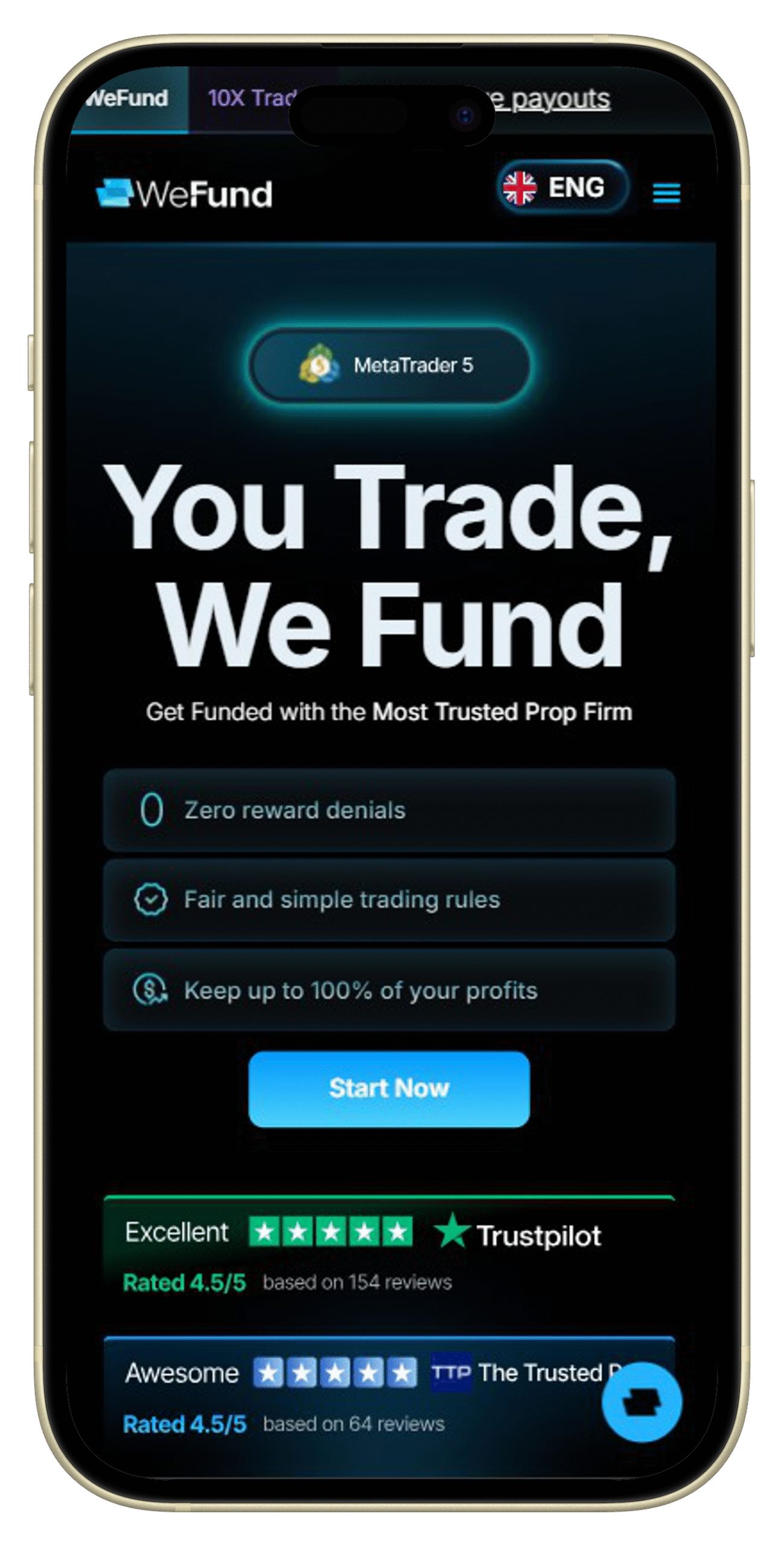
We-Fund is a proprietary trading (prop trading) firm that sells trading challenges/evaluations. Traders pay a fee to prove their skills on a demo account and, if they pass, are funded with real capital to trade with profit-split payouts. According to their site, traders can:
• Earn funding up to $400K and scale to $2M.
• Keep up to 100% of profits.
• Withdraw payouts daily or bi-weekly.
• Use the MT5 platform with support and simple rule sets.
The firm positions itself as a trusted solution for traders to get funded and trade without using their own capital.
02.
Work challenges
While the site promises straightforward funding, there are significant reported challenges from traders:
-> Rule Enforcement & Payout Denials
Many users report that payouts are denied after they successfully passed challenges or met the profit targets, often due to rule interpretations like “grid strategy” or other internal criteria that weren’t clearly explained upfront.
-> Hidden or Unclear Rules
Some traders claim that We-Fund applies internal definitions of trading rule violations not transparently listed in public rules, leading to unexpected rejections of payouts.
->Trust & Transparency Concerns
External risk-analysis sources have given the site a very low trust score, citing vague business model explanations, lack of clear regulation details, and unrealistic claims about profit splits and maximum scaling.
->Mixed User Feedback
There are positive experiences, too — some traders report clean payouts, quick support, and satisfaction with the dashboard and funding process — but negative reviews are frequent and strongly worded, with complaints of blocked accounts and withheld profits.
->Main Outcome / Result
According to their marketing, successful traders can:
• Get funded quickly.
• Earn large profit shares (up to 100%).
• Withdraw profits easily with supportive tools and clear rules.
03.
Main result
Overall, the result appears mixed — with a significant portion of users praising the platform and others warning of potential trust and transparency issues.